


Should I replace my 4-iron with a 7-wood?

Discover when a 7-wood outperforms a 4-iron, when the iron still wins and how to know which belongs in your bag.
Many PGA Tour players and recreational golfers are replacing their 4-irons with 7-woods.
A 7-wood typically flies higher and farther than a 4-iron, making it easier to hold greens.
The larger head and wider sole of a 7-wood offer more forgiveness, especially from the rough.
Golfers who play in windy conditions or prefer a lower ball flight may still benefit from a 4-iron.
At the recreational level, the 3-iron is dead, so now there are few clubs in golf that expose a golfer's ego quite like a 4-iron. Most players don't particularly enjoy hitting one. They don't look forward to pulling it from the bag. Yet countless golfers continue carrying one because, well, that's what good golfers are supposed to do.
Meanwhile, something interesting has happened over the last decade.
The best players in the world have quietly started moving in the opposite direction.
Seven-woods, once dismissed as clubs for seniors or golfers with slower swing speeds, have become common on the PGA Tour. In fact, it's becoming more surprising when a Tour player doesn't carry one than when he does. Consider this: At the 2026 Masters, 40 of the 91 players in the field carried a 7-wood.

So, should you replace your 4-iron with a 7-wood?
The answer depends on where you play, how you swing and, most importantly, what shots actually help you shoot lower scores. But after talking with Ping vice president of fitting and performance Marty Jertson, one thing became abundantly clear: Most recreational golfers owe it to themselves to at least consider it.
"We're sitting here in mid-2026," said Jertson, who has played in five PGA Championships and a U.S. Open. "We are indeed seeing a lot of the single-digit avid players being not only open to it when they come in, but also asking for it."
That last point is important. Seven-woods are no longer just for beginners or higher-handicap golfers. Better players are embracing them because they work.
Why a 7-wood goes farther and flies higher
Some golfers incorrectly assume that a 7-wood replaces a 4-iron simply because they typically have about the same loft, around 21 degrees, but loft is really a smaller part of the story.
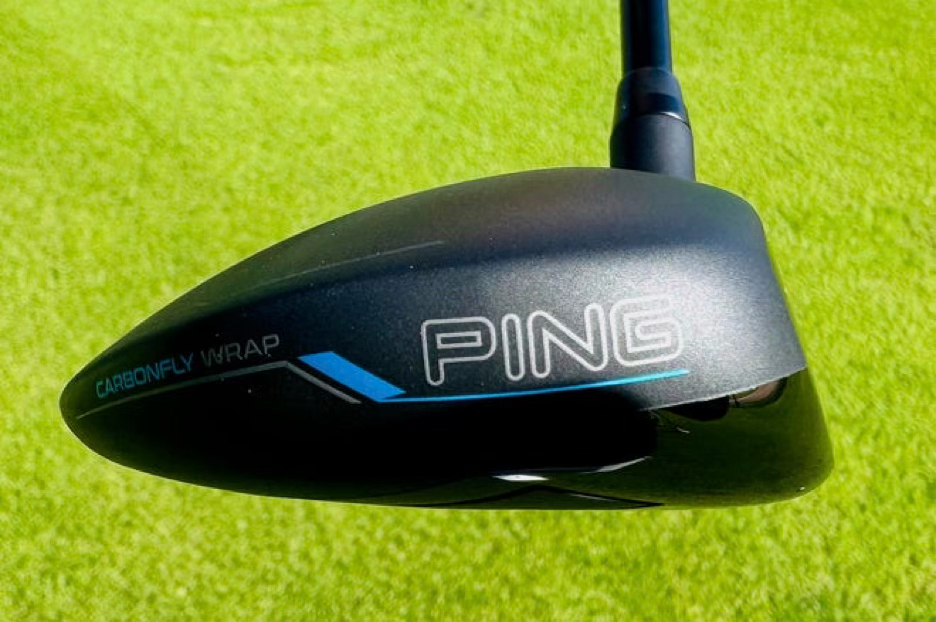
A 7-wood has a longer shaft, which creates more clubhead speed and, in turn, more ball speed. Its center of gravity (CG) also sits much lower and farther back than it does in a 4-iron. That deeper CG helps launch the ball higher while producing more spin.
"The fairway woods will spin more," Jertson explained, "and they will have a higher peak height and steeper descent angle."
And that's exactly what many recreational golfers need, and don’t get from their 4-iron.
Imagine a long par 3 with water short and bunkers guarding both sides. With a 4-iron, you might need one of the best swings of the day just to carry the trouble and hold the green. A properly fit 7-wood makes that same shot easier because the added speed, spin and height help the ball fly farther and land softer.
The same is true on long approaches into par 4s and 5s. A shot that releases well past the hole with a 4-iron may stop much closer with a 7-wood because it comes down more steeply.
And while distance grabs the headlines, forgiveness is probably the bigger advantage for 7-woods.
The larger head and wider sole of a 7-wood make it easier to hit from imperfect lies, especially rough. Thick grass can grab the hosel and leading edge of a 4-iron, robbing it of speed and sending the ball offline. A fairway wood's wider sole glides through the grass more effectively while the larger head helps preserve ball speed.
Why you might still want a 4-iron
Does all that mean the 4-iron is obsolete?
"Let's say you're a pretty good ball striker," Jertson said. "You're pretty consistent, find the center of the face quite a bit, and you play somewhere that's pretty breezy. If you live in Texas or wherever and are always playing in breezy conditions, and you need to be able to fly the ball down, then a 4-iron could be the move."

A 7-wood launches beautifully, but wind exaggerates a high flight. A 4-iron's flatter trajectory and lower spin make it easier to keep the ball under the breeze and chase it onto firm greens.
"Maybe your course has a lot of approach shots or long par 3s or reachable par 5s where you actually can, and do, want to be able to chase and move the ball up there a little bit," said Jertson, who has played in five PGA Championships and was in the field at the 2020 U.S. Open. "That’s a 4-iron shot."
Golfers who enjoy shaping shots may also prefer the compact look and precise feel of a long iron.
The biggest mistake golfers make
Perhaps the most interesting part of my conversation with Jertson had nothing to do with either club but instead how golfers think about replacing one.

Most golfers think they're swapping a 4-iron for a 7-wood. Fitters look at it as a rebuilding project at the top of the bag.
Adding a 7-wood may require changing a hybrid, adjusting another fairway wood or even adding a 9-wood so the distance gaps still make sense.
One of the simplest fitting tricks Jertson shared is something most golfers never consider — length.
"If someone is worried about the 7-wood or 9-wood going a little too high, maybe a little too far, don't be afraid to just order it 1 inch short," he said. "It'll do a lot."
A shorter shaft will reduce distance, lowers peak height slightly and often improves contact because the club becomes easier to control.
"It's like... I'm going to get the 7-wood or 9-wood, but I'm going to play it at hybrid length," Jertson said, noting that it is a common practice for PGA Tour players.
It’s also the kind of fitting nuance most golfers never hear about, but that can make dialing in the top of the bag much easier.
So, should you make the switch?
If you hit your 4-iron high enough to hold greens, confidently flight it through the wind and consistently find the center of the face, congratulations. You're probably one of the golfers who should keep it.
For everyone else, the question is much simpler.
Which club helps you hit more greens?
Golf doesn't award style points for carrying a long iron. It rewards golfers for getting the ball close to the hole.
If a 7-wood launches higher, flies farther, lands softer, performs better from rough and inspires more confidence every time you pull it from the bag, then it's doing exactly what every golf club is supposed to do.
The scorecard doesn't care whether the club has a chrome blade or a headcover.


Comments